
My Grandmother, the Afghan Princess
Memories of an Afghan princess from a time when her country was known as the “Switzerland of Asia.” Her granddaughter uncovers a glimpse of a world of elegance, resilience and a nation once flourishing with promise. This is a journey through her eyes, a tribute to the Afghanistan she knew and the legacy she left behind.

Marina S. Haq and her grandmother, Mariam Haq, in Zurich, Switzerland, 2024
Photo Courtesy of Family Haq Archive
I would like to portray my grandmother, Mariam Shah Assefy-Haq, because for me, she is the portal to a remarkable, hidden world I have never experienced. My parents are from Kabul and fled their homeland – my mother to the United States when she was eight and my father to Switzerland when he was seventeen. I am Afghan, Swiss and American, yet I have never been to Afghanistan. Since childhood, my grandmother has shared countless stories about her homeland. As a child, I thought they were fairy tales. Only later did I realize that these stories were real. But even then, I could not understand how these fairy tales corresponded with the image of Afghanistan portrayed by the mass media.
The country where my grandmother lived was often called “the Switzerland of Asia” due to its stability and the peaceful coexistence among its people and landscapes. This Afghanistan allowed for harmony among various ethnic groups and was open to reform and progress. It was these factors that led many to refer to that period as the country’s “Golden Era.” However, the peace ended abruptly in 1978. With the communist overthrow during the Saur Revolution and the invasion of Soviet troops a year later, the course of Afghanistan’s history changed forever. Like many other Afghans, my grandmother chose to leave her homeland. What makes her story unique is that the Saur Revolution did not just mark a political turning point – it also marked the end of her family’s 150-year rule.
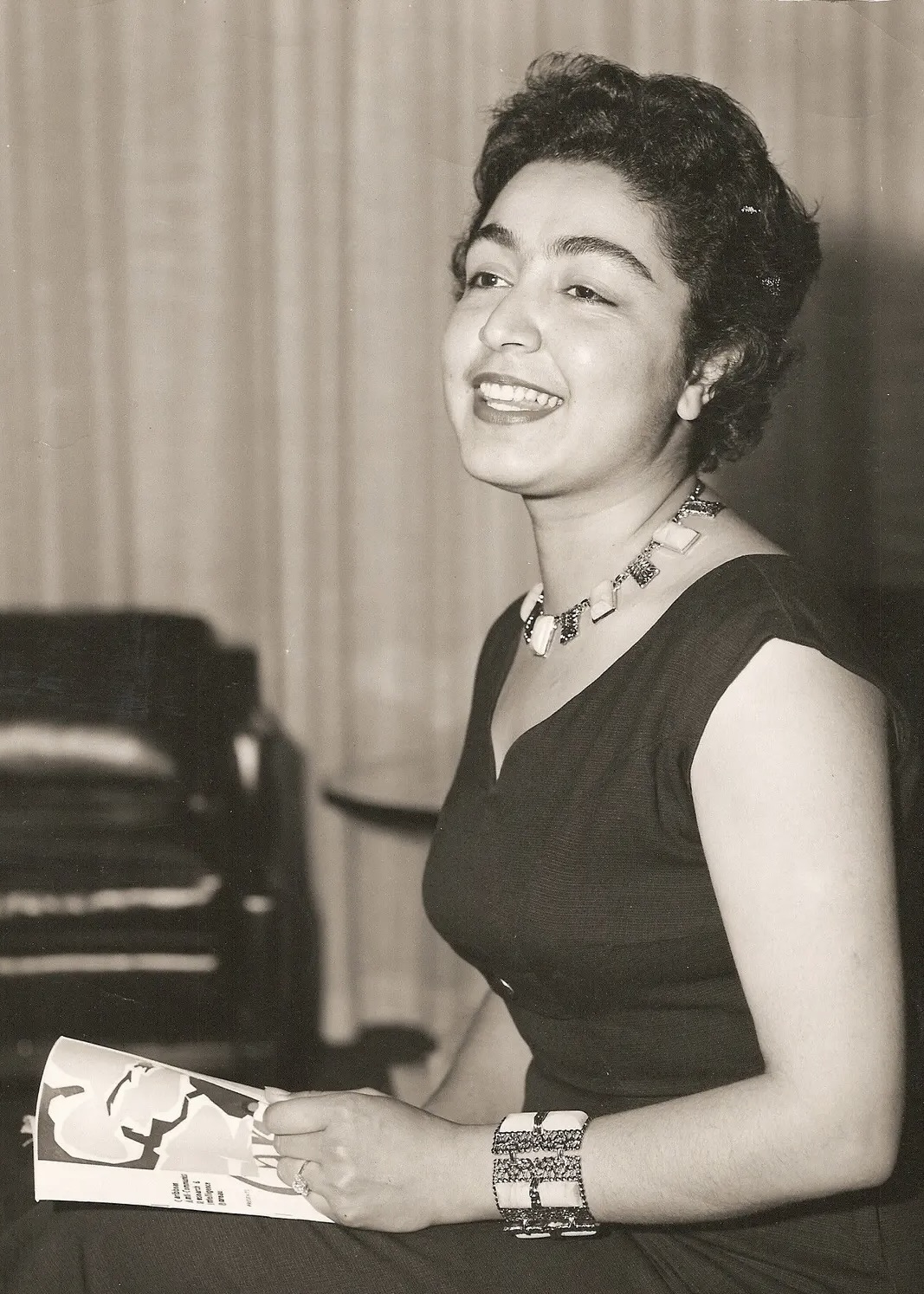
Mariam on an official visit to the U.S., 1959
Photo Courtesy of Family Haq Archive
My grandmother, Mariam, was born on June 1, 1934, in Kabul, the daughter of Princess Halima and Prince Ahmad Shah Khan, the court minister of Afghanistan. She grew up among individuals of high rank and fondly recalls how, once a week, her father would host Afghanistan’s tribal leaders for lunch at their home. As a young girl, Mariam was always present, sitting proudly and attentively beside her father during these important meetings in his reception house.
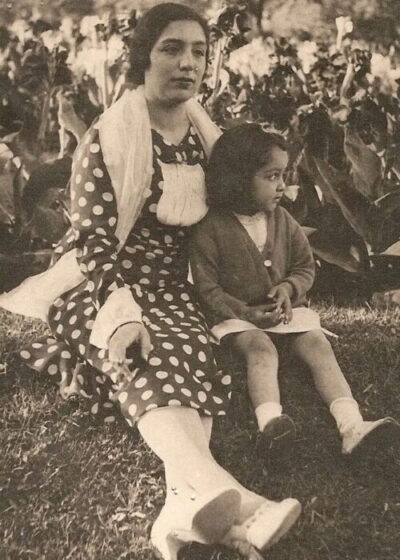
Mariam with her mother, Princess Halima in Kabul in the late 1930s
Photo Courtesy of Family Haq Archive
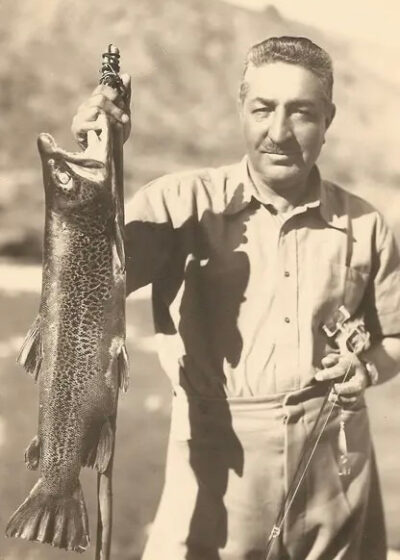
Mariam’s father, Prince Ahmad Shah Khan, Minister of Court
Photo Courtesy of Family Haq Archive
My grandmother’s residence in the Deh-Afghanan neighborhood, in the heart of Kabul, featured an enormous garden, which she often referred to as a park. The garden was large enough for her to ride her bicycle or horse freely. The garden had two expansive lawns, a large fountain that also served as a pool, a tennis court and two reception houses – one for her father’s meetings with friends and another for her mother and her friends, as both genders socialized separately. In addition, there were the servants’ quarters and various stables throughout the property.
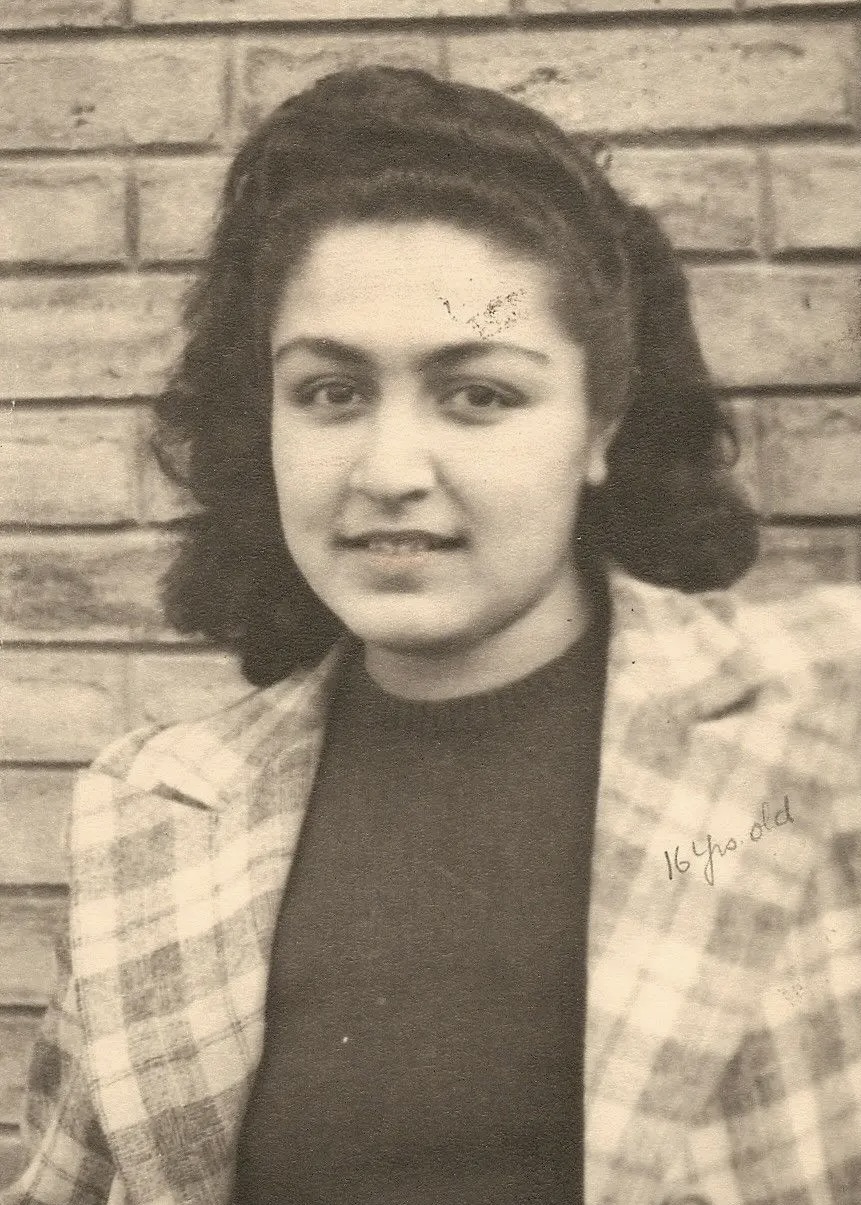
Mariam at the age of 16 in Kabul, Afghanistan
Photo Courtesy of Family Haq Archive
Mariam’s family kept a variety of animals – hundreds of dogs of different breeds, monkeys, cows, horses, both white and colored peacocks, pigeons, pheasants, even a bear, a tiger and a leopard. When my grandmother was six years old, her father gifted her a tiger, just a month old. “I put a dog leash around the little tiger’s neck and walked it like a dog in our summer residence in Paghman,” she recalled. However, shortly after, the little tiger was sent to a zoo after it playfully bit Mariam on the calf.
Mariam attended a German-Afghan primary school before moving on to Sacred Heart Convent in Dalhousie, India, where she studied alongside her sister. However, their time at the convent was brief, as the partition of Pakistan and India was imminent. The two sisters then continued their education at the French-Afghan school Lycée Malalai in Kabul. In addition to her formal schooling, my grandmother received private lessons in English, French, German, Turkish and other languages.
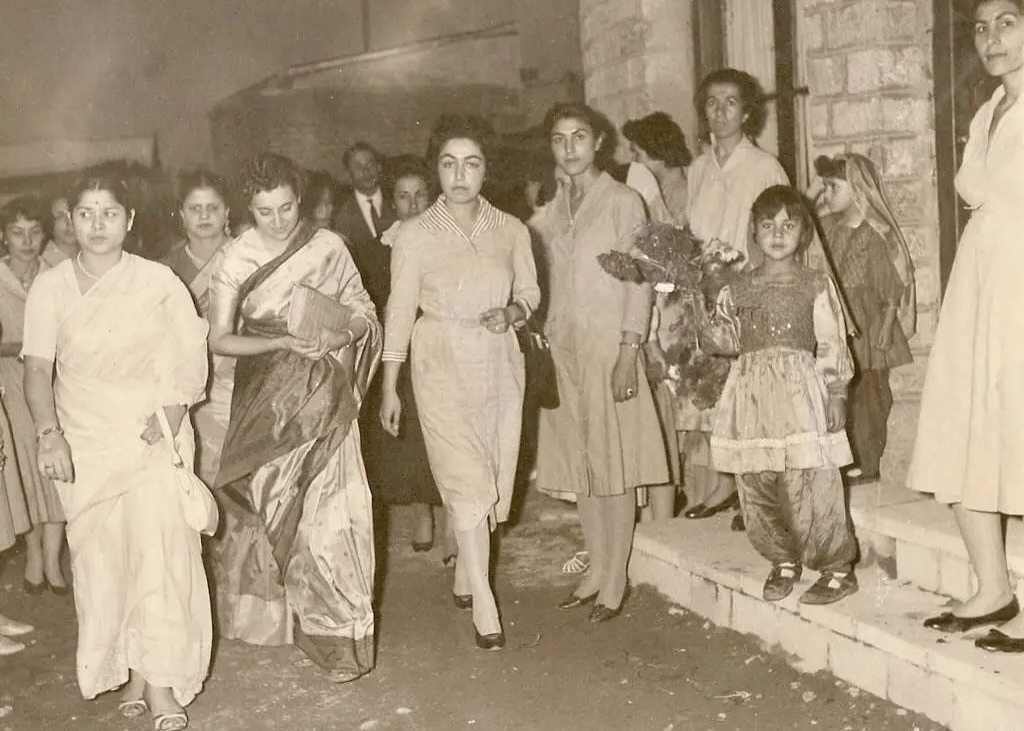
Indian Prime Minister Indira Gandhi and Mariam Haq in Afghanistan (second and third from left)
Photo Courtesy of Family Haq Archive
Mariam fondly recalls how, while other students had to walk home, her father would send a carriage for her. “I always took my best friend with me and brought her home,” she said. “We had a carriage with one horse for school and a larger one with two horses for pleasure trips and outings.” After completing her schooling, Mariam pursued science at Kabul University, before working as a teacher at the Lycée Zarghuna girls’ school, where she taught home economics, physics and English. She also worked as a librarian and translator taking on important commissions, such as translating speeches by Indian Prime Minister Indira Gandhi and American First Lady Patricia Nixon into Dari/Farsi, one of Afghanistan’s primary languages.
In 1959, Mariam was invited to the United States by the U.S. State Department to introduce and represent her home country. During this two-month trip, she had the opportunity to meet many educators, ambassadors, and politicians, including Eleanor Roosevelt. As a teacher, she was briefed on American teaching methods, which she would later apply in Afghanistan.
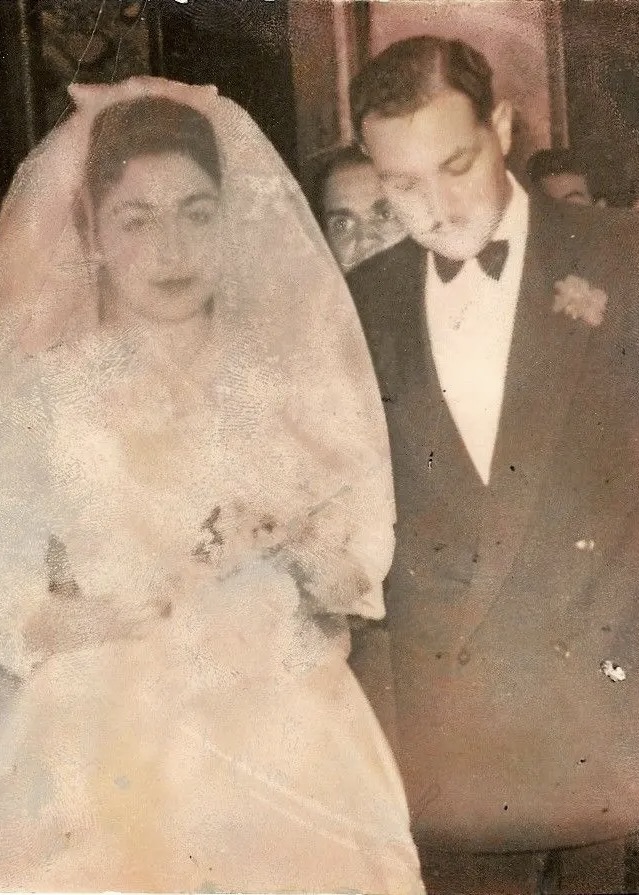
Mariam and Zia at their wedding in Kabul, 1960
Photo Courtesy Family Haq Archive
In 1960, at the age of 25, Mariam married Zia-Ul Haq, with whom she shared a blissful 53-year marriage that resulted in a daughter and three sons, among them my father. My grandparents’ wedding was only the second in Afghanistan where both genders took part and celebrated together.
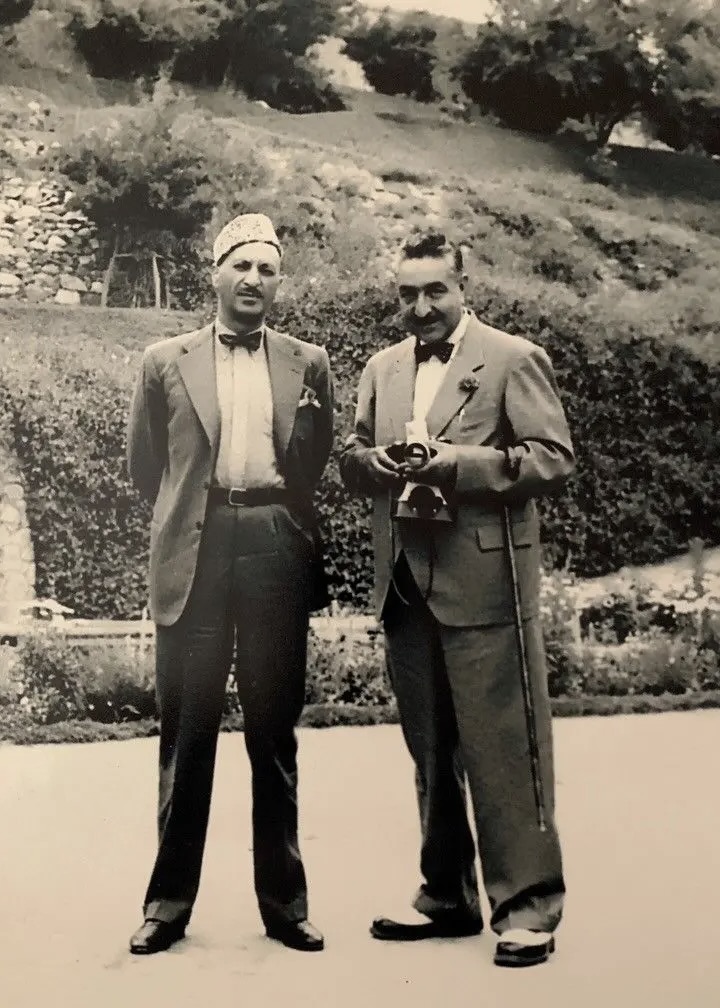
Mariam’s father, the Minister of Court,
Prince Ahmad Shah Khan, with his nephew and son-in-law, King Zahir Shah
Photo Courtesy of Family Haq Archive
The Barakzai dynasty dates to the 19th century, with the crown passed down in succession. After more than a dozen rulers, Zahir Shah became the last king of Afghanistan – my grandmother’s first cousin and her brother-in-law, as the last queen of Afghanistan, Queen Homaira, was her sister.
King Zahir Shah’s father, King Nadir Shah, was both a first cousin and brother-in-law to Mariam’s father, Prince Ahmad Shah Khan, the Minister of Court. Furthermore, Mariam’s mother, Princess Halima, was the granddaughter of King Mohammad Yakub Khan. Thus, my grandmother was not only a member of the Afghan royal family through her father, Prince Ahmad Shah Khan, but also through her mother, Princess Halima.
In Afghanistan, members of the royal family often led progress in the country. When Prince Daoud Khan, a first cousin of both the king and my grandmother, became prime minister in 1953, social reforms gained significant momentum. Women increasingly entered social and political professions, including roles as teachers, nurses, doctors, stewardesses, ministers, editors, judges, singers and policewomen. Daoud Khan and the king decided to abolish the veil and asked the female members of the royal family, including Mariam, her sisters and her cousins, to appear in public without it. The princesses were to serve as role models and inspire the Afghan population.
My grandmother recalls that the abolishment of the veil was a gradual process, not something that happened overnight:
“For some time after, many women still wore traditional modest clothing which did not reveal much skin or curves, with a small thin headscarf. It took a few years for women to gain the courage to embrace change. Eventually, they became so emancipated that they even wore miniskirts – especially the female students and the women in the capital.”
Mariam was less affected by the abolition of the headscarf, unlike her friends:
“I was mostly at home and didn’t go out much. We traveled by car or carriage, and there was always someone with me. That’s why it didn’t feel very different. I wasn’t really free myself, but others, like my friends, could go anywhere. We also had no reason to leave our residence. We had this huge park where I could ride my bike and go horseback riding. I didn’t need to leave my home. I only went out to go to school.”
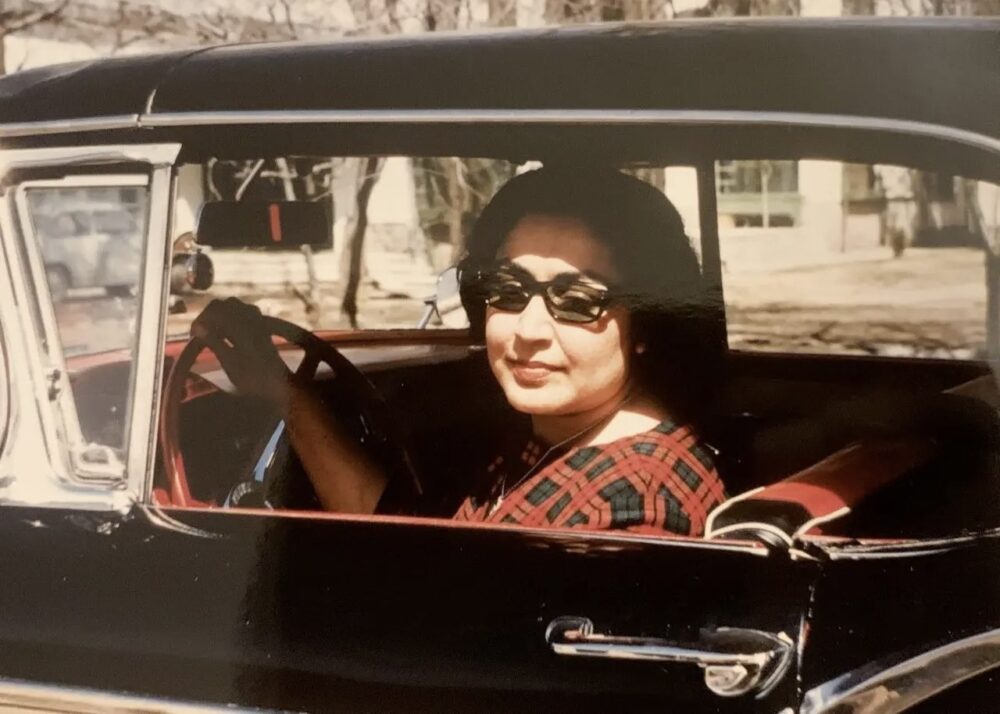
Mariam driving a car in Kabul
Photo Courtesy of Family Haq Archive
In the mid-1950s, in her early 20s, Mariam was not only one of the first women to represent Afghanistan in the United States but also among the country’s first skiers and drivers. Mariam became the first Afghan woman to drive a car when one was transferred from Germany to Afghanistan. She often accompanied her husband on business trips to Switzerland, and after one such trip in 1964, they drove to Germany, where they bought a Mercedes for Mariam’s mother in Stuttgart and a Volkswagen for themselves. On the trip to Afghanistan, Zia drove one car while Mariam followed in the other. The 10,000-kilometer journey took about two weeks, leading them through Austria, Turkey, Syria, Lebanon, Iraq and Iran.
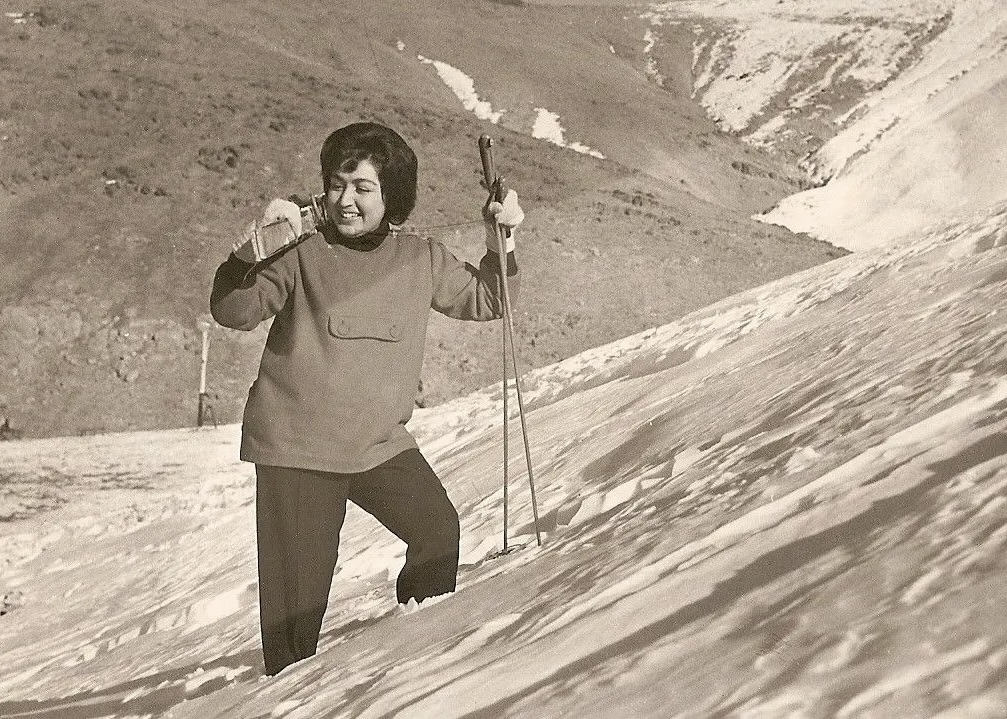
Mariam with skis in Kabul, 1963
Photo Courtesy of Family Haq Archive
Daoud Khan’s reforms met with resistance from conservative forces in rural areas, leading to tensions within the royal family and ultimately his dismissal as prime minister in 1963. The Golden Era, the 40-year reign of King Zahir Shah, continued for another decade until Daoud Khan, the ousted prime minister, ended the monarchy in a bloodless coup in July 1973. He went on to establish the republic, becoming Afghanistan’s first president. He continued his efforts to achieve gender equality. His rule lasted five years. His overthrow during the Saur Revolution on April 27, 1978, marked the end of progress in Afghanistan, ushering in communist rule, a decade-long Soviet invasion, the Taliban regime and the “War on Terror.” With this political development, the situation for all Afghan people, particularly women, deteriorated significantly.”After Daoud Khan’s rise to power, part of the royal family went into exile in Rome. Another part, including nearly 20 members of Mariam’s family, was tragically assassinated five years later during the Saur Revolution, when Afghan communists stormed the presidential palace. The victims of the massacre included the president, his wife, his children, his grandchildren and other close family members. My grandmother clearly remembers the early morning when she was lying in bed and heard numerous shots from the nearby palace. One shot, in particular, was so piercing that made her jump out of bed in shock: “I am not exaggerating,” she recalled. “I even told Zia that this shot sounded very, very bad to me. It was the shot that killed Daoud Khan. I realized this when I later learned the time of his death.” After the massacre, my grandmother and the surviving members of the royal family feared for their lives. Some fled, while many were arrested and held as political prisoners for several months or even years, including Mariam’s husband, her brother, her brother-in-law and her then 17-year-old son, my father. The royal family faced immense pressure under the communist regime.
My grandmother learned from the television that the communists were holding an exhibition about the royal family near their residence, where objects belonging to their family were on display. The exhibition took place a few months after Daoud Khan’s death, and no one from the family attended – except Mariam. “I knew it was dangerous for me to go there. I could have been recognized and killed. But sometimes, when you are very scared, you become brave.” She remembers noticing a doormat at the entrance of the exhibition with Daoud Khan’s face on it. “I stepped over it without touching it.” Mariam was amazed and shocked to see some familiar items on display: “A jacket of my cousin, some furniture from Daoud Khan’s residence and even my father’s bed, his fishing rod and waders.” In an effort to avoid drawing attention and risking recognition, she made a few proper communist comments in order to blend in with the crowd. However, she could not resist asking the communist in charge of the exhibition, “Why are you showing these old and dusty relics of the royal family instead of the beautiful things they once owned?” The man replied, “The royal family took all the valuable things with them when they left the country. These are just the worthless items they left behind.” My grandmother knew this was a lie – the communists had not only murdered many members of the royal family; they had also seized their property. But it was not the right time to argue. She walked away feeling conflicted: “At first, I wished I hadn’t visited the exhibition, but in the end, I’m glad I saw it.” As my grandmother was leaving the exhibition and heading to her car, she was stopped by the communist in charge of the exhibition. He asked why she had not stepped on the doormat with Daoud Khan’s picture. My grandmother responded with confusion, as if she had not noticed the doormat or recognized Daoud Khan’s face: “Luckily, they let me go without any trouble.”
Mariam and Zia had originally planned to wait to see how the new power dynamics in the country would unfold. But Zia, who had already been imprisoned as a political prisoner, began receiving warnings that he would soon be arrested again. It was then that the family decided they had no choice but to flee Afghanistan: “We were told that Zia wouldn’t make it out of prison alive again,” my grandmother recounts. She then goes on to describe how she sat with her husband on a swing in their garden, mentally absorbing the familiar surroundings of her childhood for what she knew would be the last time:
“It was a terrible feeling – to know that we were about to escape. I didn’t feel like I would never return, but I was sad to leave our home – the house that Zia had built with so much of love. It wasn’t a good feeling – I was deeply worried about how we would manage to leave from Afghanistan. But I also knew, deep down, that this was no longer a place for us. We couldn’t stay here anymore; there was nothing left here for us. In some way, I also felt a sense of relief to leave the country. I knew that this was the only way to freedom. If we had stayed, we would have been prisoners in our own house. No matter what we did, there was always a risk of being thrown in jail because I was a member of the royal family.”
The decision to leave the country was also driven by the Soviet invasion of Afghanistan in December 1979. As the conflict escalated, members of Mariam’s family fled to Germany, France, Italy and Switzerland. Soviet soldiers began going door to door, forcibly recruiting young men over the age of 15 to fight alongside them against the Afghan Mujahedin. In response, Mariam arranged for her teenage children to flee with other relatives to Switzerland, a country known for its political neutrality – a place Mariam and Zia were already familiar with from their business trips. The four children arrived there in 1982, where friends and relatives cared for them until Mariam and Zia were able to join them a year and a half later.
Mariam’s escape was nothing short of adventurous. After the communists confiscated her passport at the airport and forbade her from leaving the country, the only option left was to escape illegally with the help of people smugglers. Mariam kept her escape plans a secret, knowing that in such a volatile political climate, trust was a luxury she could not afford. Anyone could have alerted the authorities. As a result, she took nothing with her, leaving the house as though they were going on vacation – a façade to cover the gravity of the situation.
The escape from Kabul to Peshawar in Pakistan was meticulously planned – a week-long odyssey that involved taxis, bicycles, donkeys and horses, passing narrow mountain paths, crossing rivers and even an encounter with thieves. Once in Pakistan, Mariam and Zia spent a few days in a hotel in Peshawar before moving to Islamabad, where they stayed with friends for six months while they made their way to Switzerland. In January 1984, my grandparents landed in Zurich Kloten, where their children were waiting for them: “I was very happy to see them again. It was a deeply emotional moment,” my grandmother recounted.
The children, who had already settled into life in Switzerland, along with the friendly neighbors, made it much easier for Mariam and Zia to settle in. In addition, Mariam’s knowledge of basic German, gained from attending courses at the German School in Kabul, helped her navigate the new environment. “I was very well received by the Swiss people. I had heard that they were very reserved – but they were not at all. They were incredibly open. It was refreshing to meet new people – it helped a lot during this difficult time. I never felt like a foreigner – they made me feel like one of them.”
I learned that material things are worth nothing. We had a lot in Afghanistan – houses, businesses and money – and we left it all behind. The only things you truly take with you are your education and upbringing – who you are. Money and possessions hold no value for me anymore, because I saw with my own eyes how I lost everything in a single day.
After spending 20 years in Switzerland, my grandmother was finally able to return to Afghanistan. Her first visit was in 2003, at the beginning of the US-led “War on Terror.” The year before, King Zahir Shah had also returned to Afghanistan for the first time in 29 years. My grandmother recounts that it was a strange feeling to return to her homeland:
“After a few days in Afghanistan, I had the feeling that I had never really left. I was happy to return to my homeland – the country where I was born and had spent a great part of my life. I can still remember tears running down my face when I saw the familiar surroundings again. Of course, so much had changed – the people I once knew then were no longer there, but the area itself remained more or less the same. Some of the old shopkeepers recognized me. It made me very happy to see those familiar faces again. It was also comforting that the king had returned to Afghanistan.”
After this first return to Afghanistan, my grandparents and their children, including my father, made several more trips back to their homeland.
Fleeing Afghanistan for Switzerland marked a drastic change in my grandparents’ lives. They lost not only their homeland, but also family, friends, as well as their financial and social wealth, including material possessions and the high social status. In return, however, they gained the freedom that Switzerland offered them. My grandmother reflects:
“I am very grateful that Switzerland welcomed us with open arms. Our life in Afghanistan was certainly easier and more comfortable in the beginning, but Switzerland eventually became my new home. In Switzerland I was free and no longer had to live in fear of the communists. If we had stayed in Afghanistan, we would have been imprisoned and likely killed for no reason.”
When asked what she had learned from her life experience, my grandmother replied:
“I learned that material things are worth nothing. We had a lot in Afghanistan – houses, businesses, money – and we left it all behind. The only things you truly take with you are your education and upbringing – who you are. Money and possessions hold no value for me anymore, because I saw with my own eyes how I lost everything in a single day. That is something you should never rely on. You should build on your education and your character. That is what I learned from my experience.”
Discover more about Marina S. Haq at:
@marina.sanam