
The Privilege of Language Learning
In this personal reflection, Emma Pfister, a current postgraduate student at the University of St Andrews who completed her undergraduate degree at the university in 2026, explores the privilege of language learning and the role of multilingual education in shaping her academic journey. Drawing on her experiences growing up in multilingual Switzerland and studying English, French, and Spanish at St Andrews, she reflects on language education, cultural awareness and the opportunities that shape our relationship with languages.

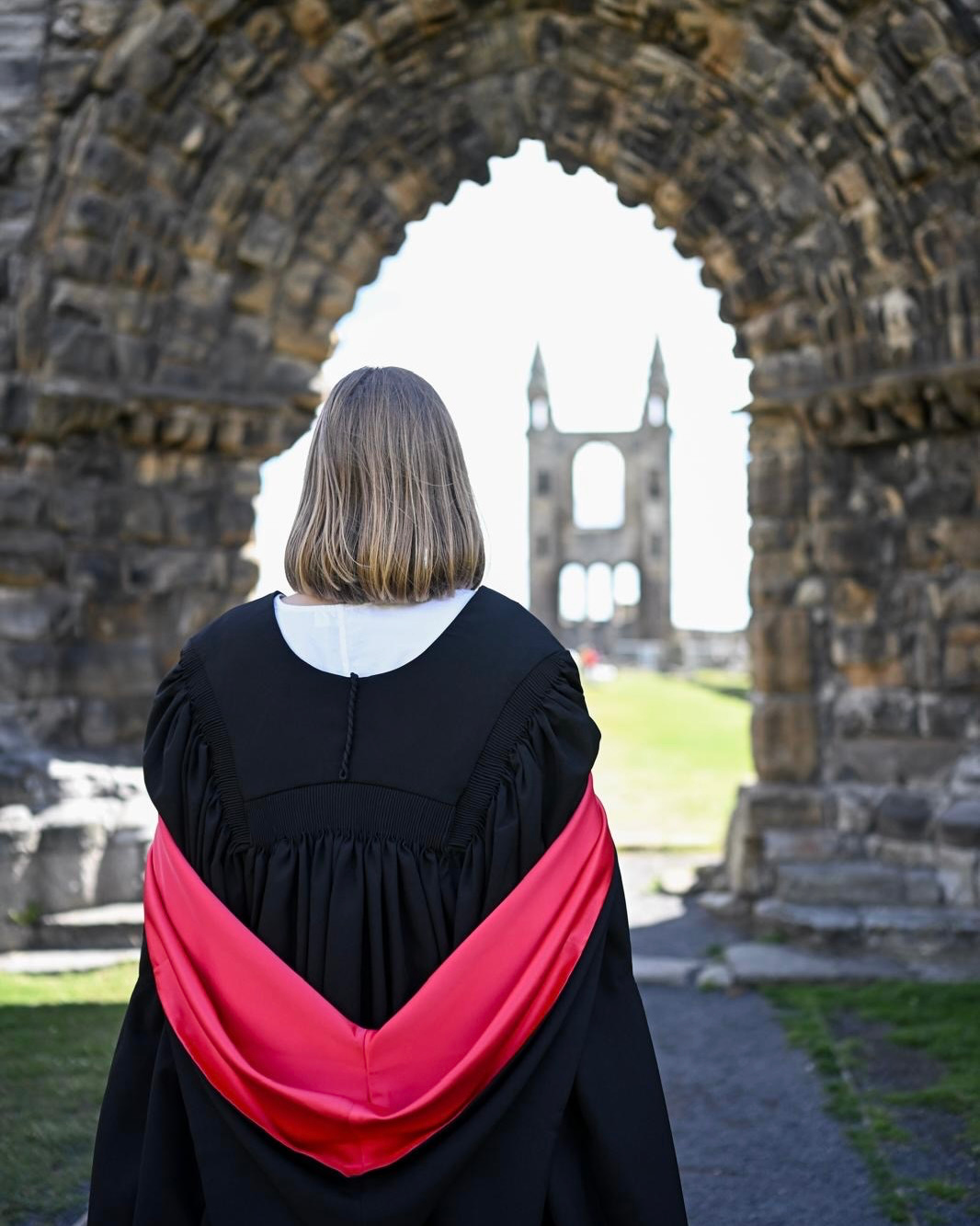
Photo Courtesy of Emma Pfister
“How do you speak so many languages?” It is a question I have been asked many times since moving to the UK four years ago, usually by fellow students, and one that initially left me more confused than flattered. Having grown up in the German-speaking part of Switzerland, where learning several languages in school felt completely normal, I never really understood why the answer seemed so surprising.
I would always find myself saying, “I just learned them in school.” I am not trying to be funny or cool when I say that; it genuinely never occurred to me that this would be a surprising answer. It was only after being asked several times that I started wondering why people were so interested in something that had always seemed quite ordinary to me.
For most of my life, I grew up in the German-speaking part of Switzerland, where multilingualism is part of everyday life. We speak Swiss German in everyday conversations, while official communication is generally in Standard German, as well as, depending on the situation, French, Italian, Romansh or even English. Supermarket products are labeled in French, Italian and German. Switzerland’s multilingualism is something I have had to explain many times since coming to the UK and meeting people from all over the world.
When I was in school, English was the first foreign language I learned, followed by French. I then started Latin and later learned Spanish in high school. At university, I took evening classes in Italian and later started trying to learn the basics of Romansh. I never planned on knowing a certain number of languages. Literature, culture, and language had simply always been things I enjoyed, and whenever there was another opportunity to study a language or immerse myself in literature or culture, I usually took it.
Languages do not all enter your life in the same way
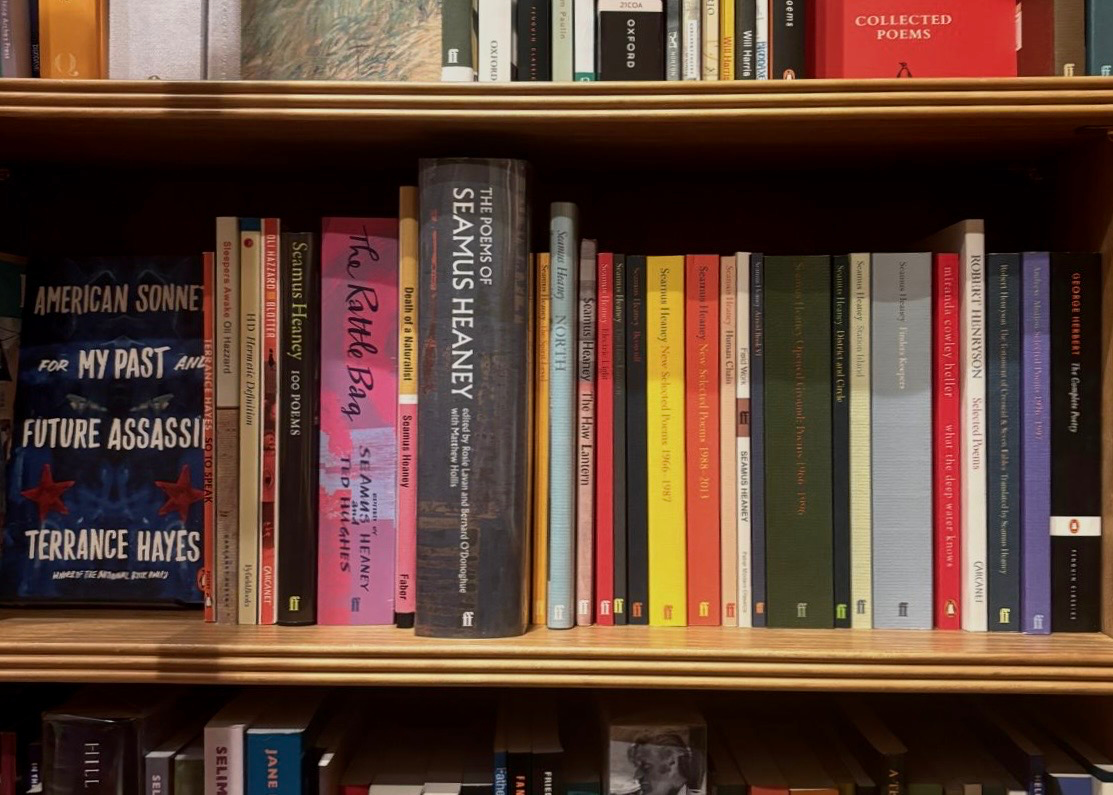
Italian is probably the best example of that. My mother worked in Italy when I was young and often took me with her on work trips, so I was frequently surrounded by Italian and was able to understand a great deal. However, I could not speak much, so at university I decided to take evening classes because I wanted to be able to speak it as well as understand it. It was quite different from learning Spanish in school because I already had a lot of passive understanding. I was not starting from scratch; I simply wanted to turn something I had absorbed through years of traveling and being around the language into something I could actively use.
Romansh is different again. It is one of Switzerland’s official languages, and I have always been interested in learning some of it because it is the fourth language of my home country. I try to learn the basics in my own time, although this is considerably harder than learning languages, because I do not personally know anyone who speaks it and there are far fewer self-teaching resources than there are for languages such as French or Spanish.
When “normal” turns out not to be normal everywhere
It was really only after coming to the UK that I started to notice how differently people can experience language education. One conversation that stuck with me was with a fellow student from England who told me that he only speaks English and regrets never having had the opportunity to properly learn another language. He taught himself some German and, during his English undergraduate degree, took classes in Medieval French and Old Norse, but had never learned another language in a school setting.
Conversations like this made me realize how privileged I had been to learn multiple languages throughout my school career. This was particularly significant because languages and literatures had always been my biggest interests and the subjects I excelled at most. Had I not had those opportunities, I doubt my passion for languages would have developed in quite the same way. Before coming to the UK, I had never really thought about language education in this way. I simply assumed that if you were interested in another language, you would have the opportunity to learn one in school, because that was how my education had worked, although this is far from being the reality for many people.
Obviously, my experience is just that: my experience. Switzerland is not a country where everyone is automatically a polyglot, and the UK is certainly not a country where nobody speaks foreign languages. I have met multilingual people here, just as I know people from Switzerland who are not interested in learning languages beyond what they need for school. I am also aware that access to education in general remains a privilege that far too many people around the globe do not have.
The teachers I grew up with
The topic of language learning has also made me think about the kind of education I had and, perhaps more importantly, the kind of teacher I want to become. I have wanted to be a high school teacher ever since I started school. I have always been interested in reading, literature, writing, languages, culture, and traveling, and teaching brings many of those interests together.
My own teachers gave me a particular idea of what language teaching should ideally look like. In my experience of school in Switzerland, my teachers generally knew their subjects extremely well. All of my language teachers had spent considerable time in the countries where their languages were spoken, through living abroad, traveling, further training, or sabbaticals. Several also had PhDs in addition to the required master’s degrees.
I never thought much about this at the time. If my French teacher could teach us French to a high standard, talk about French culture and literature, and tell us about her experiences in France, that was simply what I expected. Looking back, however, I realize how much these teachers shaped my own path. Their knowledge and enthusiasm made me want to keep learning, and they are a major inspiration for the kind of teacher I hope to become myself.
Why I kept learning
I finished my undergraduate triple degree at the University of St Andrews this summer and graduated in English, French, and Spanish. I decided to stay on for another year to do an MLitt in Medieval English Literature before starting a second postgraduate degree in French and Spanish at a different university next year. I do not study languages simply because I like being able to say that I know them. I enjoy reading things in their original language, understanding cultural contexts and thoughts, traveling and communicating with people, and exploring the relationship between language, literature and culture.
For me, learning a language has never been only about being able to speak it or knowing its grammar. Learning a language makes you more open-minded and culturally aware and gives you new ways of thinking, all of which can be difficult to achieve through translation alone. The aspect I probably appreciate the most is that each language gives me another way of approaching the world around me.
After all I have said above, it hopefully becomes clearer why I find it difficult to give a neat answer when someone asks how I learned so many languages. There was no single method or decision. I grew up speaking German and Swiss German. English and French were compulsory languages in the Swiss curriculum and I later chose to learn Latin and Spanish. Italian had been around me through frequent travels to Italy, and Romansh is something I am now trying to learn because I am curious about the fourth official language of my own country that I did not grow up speaking. So, many of the languages I learned had different starting points.
I think the reason why I often get confused by the question “How do you speak so many languages?” is that, for a long time, I had been thinking about multilingualism as something I had done, when in reality it was also something I was privileged enough to have access to through my education, upbringing, and teachers.
When I eventually become a teacher, I hope I can give some of that opportunity to other people. Not by expecting every student to become multilingual, but by making languages, literature, and cultures accessible and interesting enough that a student who is curious about them feels encouraged to explore further. Ideally, I can pass on to the next generation some of the passion for language learning and all that comes with it that my own teachers gave me.
Author’s note:
This is a personal opinion piece based entirely on my own experiences of language learning, school, university, and life in Switzerland and the UK. It is not intended as a comparison of the two education systems or countries, nor as a representation of everyone’s experience. I simply found the differences and situations I encountered interesting to reflect on.
Emma Pfister is a current postgraduate student at the University of St Andrews. She graduated from the same university in summer 2026 with a triple degree in English, French and Spanish and is now pursuing an MLitt in Medieval English Literature.