
Zurich Churches Celebrate Easter with Roses
Every Easter, Zurich’s Old Town churches mark the season with a unique gesture of hope: four historic fountains are beautifully adorned with roses. Launched by the Reformed Old Town Churches, this tradition brings spiritual symbolism and poetic beauty into the heart of the city. In this interview with Stephan Gisi, Head of Marketing and Administration at Altstadtkirchen Zürich, we explore the meaning behind the initiative and its power to unite people across cultures and beliefs.
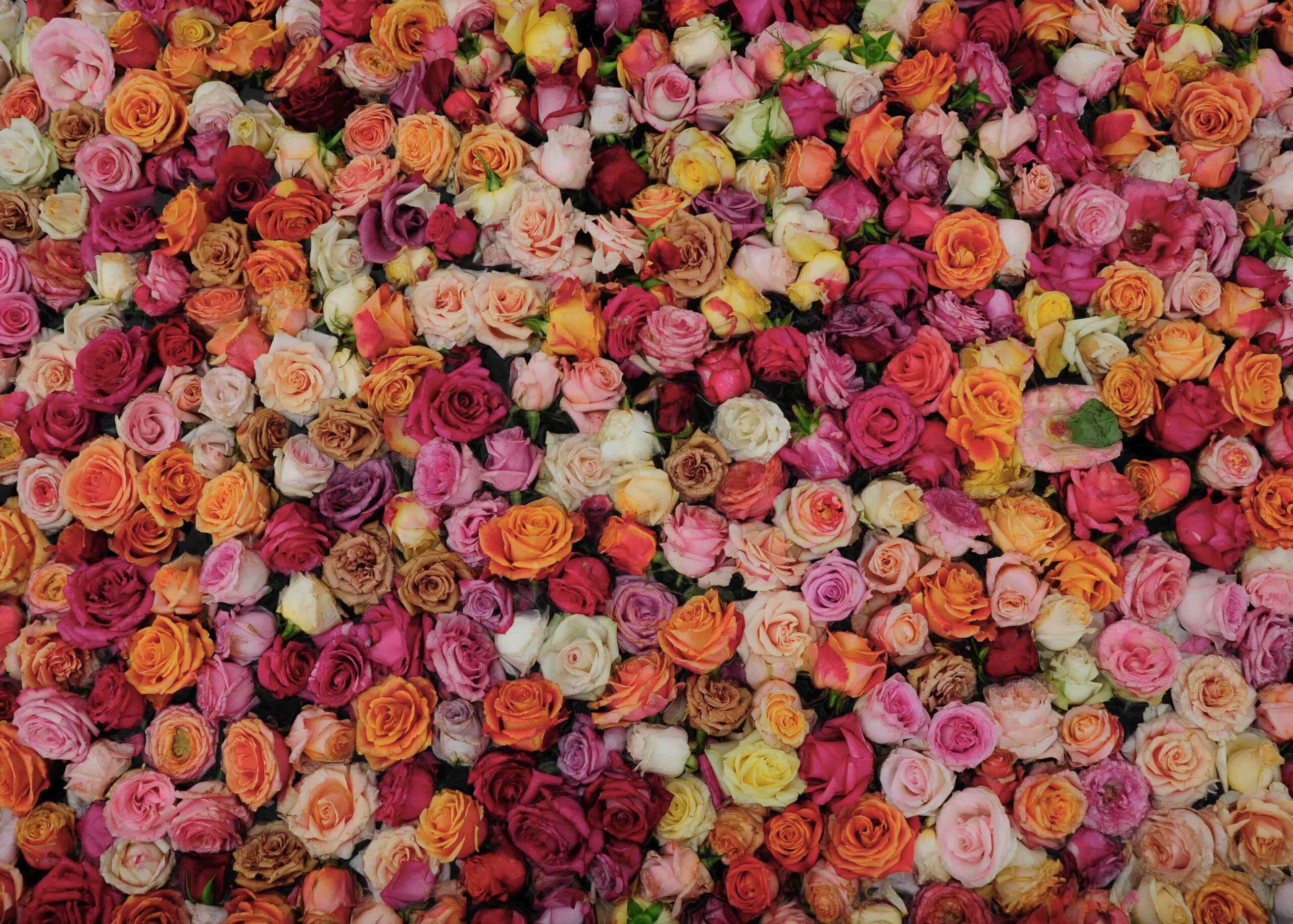
Rose Fountain in Zurich, Switzerland
Photo Courtesy of Farooq Haq
Every spring around Easter, Zurich’s Old Town is graced with a quiet yet striking transformation: four historic fountains are adorned with vibrant roses, turning public spaces into symbols of renewal and hope. This tradition, which began in 2021, has become a beloved part of the city’s seasonal atmosphere — often captured and shared on social media, yet still something of a hidden gem. A closer look reveals the connection: Every rose-filled fountain is located near a historic church, revealing the initiative’s origins. The initiative was started by Altstadtkirchen Zürich (the Reformed Old Town Churches), and is made possible every year through a private donation and the dedicated efforts of Blumen Fitze AG, the florist behind the floral displays. From the Fraumünster on Münsterhof to the charming Münzplatz, every location adds its own magic. This year, the rose fountains are on display from April 12 to April 21. In this interview, Stephan Gisi, Head of Marketing and Administration at Altstadtkirchen Zürich, shares the deeper meaning behind the initiative – its Christian symbolism, its community impact and how it reflects universal values that transcend religious boundaries.
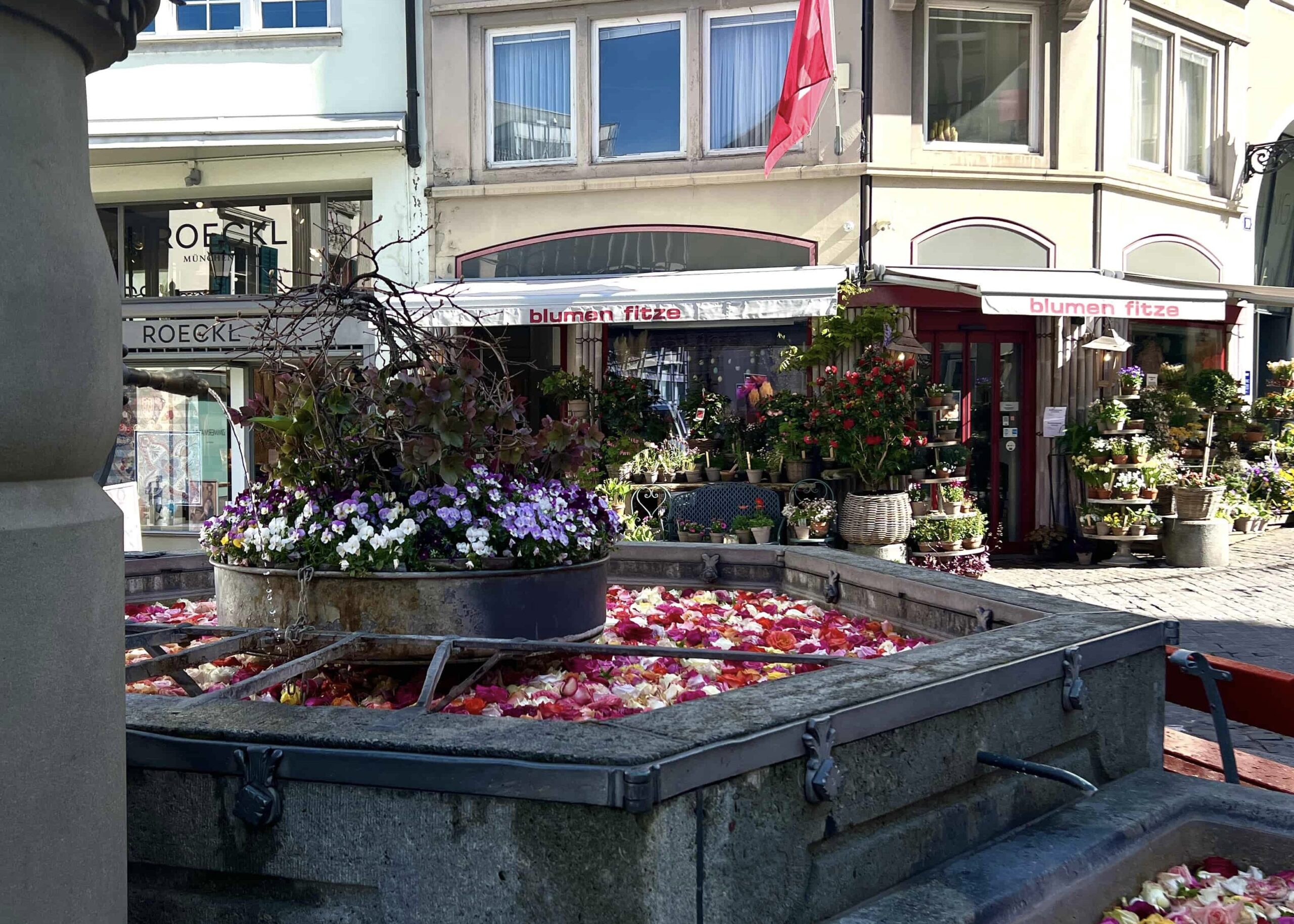
Münzplatz and Blumen Fitze AG
Photo Courtesy of Marina S. Haq
Safar: Stephan Gisi, could you tell us how this beautiful initiative with the rose-adorned fountains began?
Stephan Gisi: The idea for the rose fountains emerged in spring 2021, just before Easter – a time when the absence of shared signs of hope was deeply felt due to the COVID-19 restrictions. Zurich’s Old Town churches are spiritual and cultural landmarks, and we wanted to create a visible symbol between Palm Sunday and Easter: a sign of life and the resurrection of Jesus Christ. The initiative was inspired by Christoph Sigrist, the then-pastor of the Grossmünster, who tied it to the phrase “No roses without thorns” (Ger. Ohne Dornen keine Rosen) – a vivid reflection of the Easter story, with its themes of suffering, sacrifice and hope. The project took shape through a collaboration between the Old Town churches, the City of Zurich and Blumen Fitze AG. It’s important to note that this initiative is only possible thanks to the dedicated effort of the Blumen Fitze team, who go above and beyond to bring the rose fountains to life.
Why roses? Do they carry specific Christian symbolism?
Absolutely. Roses represent both beauty and suffering. The thorns symbolize Jesus’ crown of thorns and the pain and fear he bore during the crucifixion. The blossoms, by contrast, symbolize resurrection – life emerging from suffering. It’s a powerful metaphor.
Why do you think the rose fountains resonate so deeply – especially during Easter?
They speak to people emotionally, even without words. Seeing delicate blossoms emerging from cold stone and thorned stems perfectly captures the essence of Easter: life overcoming death. Especially in early spring, when Zurich is still grey, the fountains offer a promise of renewal. And all of this happens in the Old Town – the heart and historical core of Zurich.
How do traditions like this help foster community in an international city like Zurich?
They create quiet yet powerful moments of connection. People pause, take photos and strike up conversations. Images are shared across the world. A local tradition becomes a universal experience – bridging language, culture and religion. It reflects Zurich as a city that’s both grounded in tradition and open to the world.
The roses come from Ecuador – a gesture that spans continents. What does this say about Zurich’s global self-image?
It shows that Zurich is part of a global narrative. These roses represent more than beauty – they symbolize solidarity. Using Ecuadorian roses to adorn Zurich’s fountains reflects a city that embraces international connection while still honoring local traditions.
How is sustainability considered in sourcing the roses?
The roses come from Fairtrade-certified farms in Ecuador that meet strict environmental and labor standards, including fair wages, solar-powered irrigation and support for community education. Some people question the ecological impact of flying in flowers. But compared to other regions – like Kenya, where greenhouse cultivation often involves pumping groundwater – Ecuadorian farms use rainwater and sustainable methods that minimize their environmental footprint.
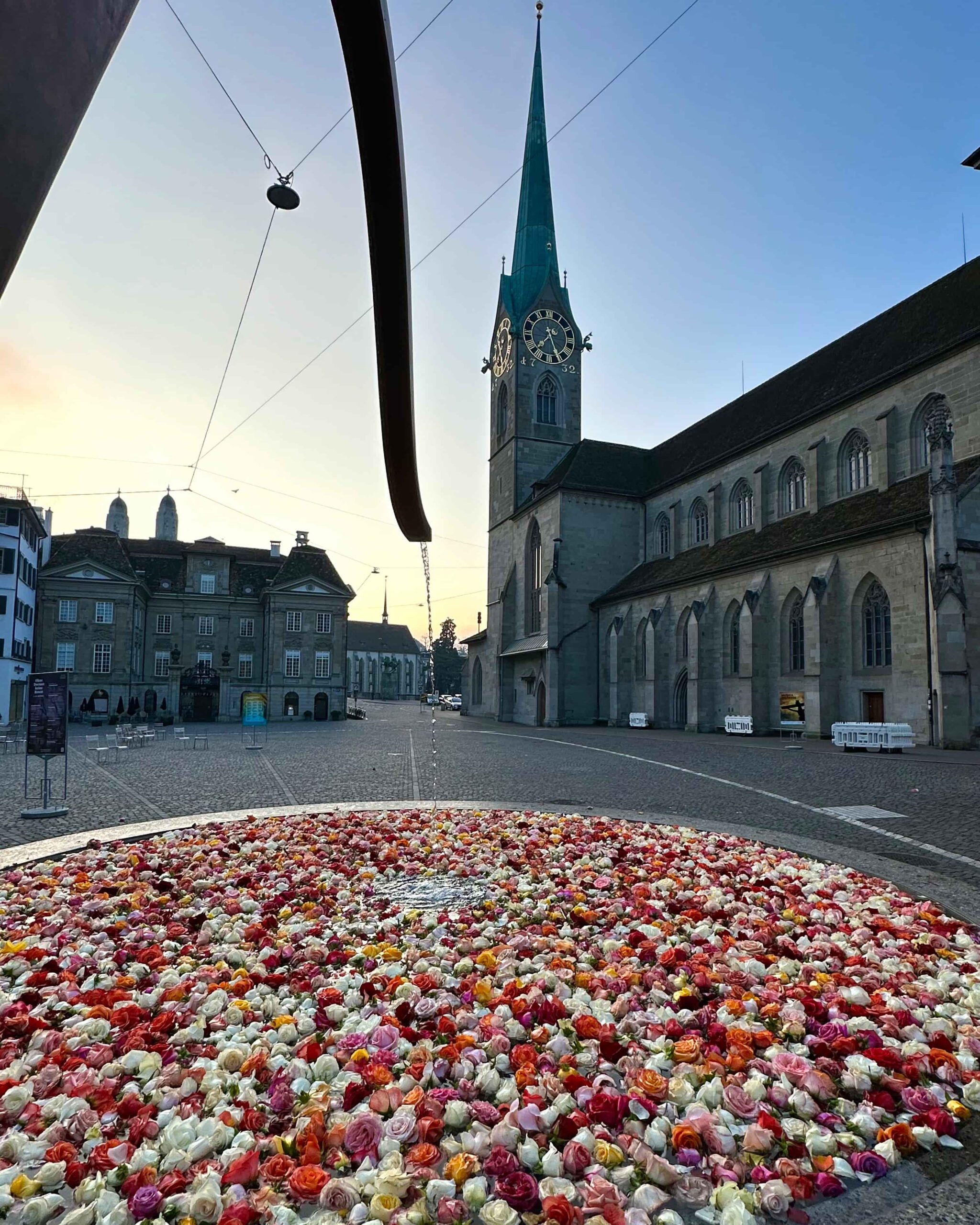
Münsterhof
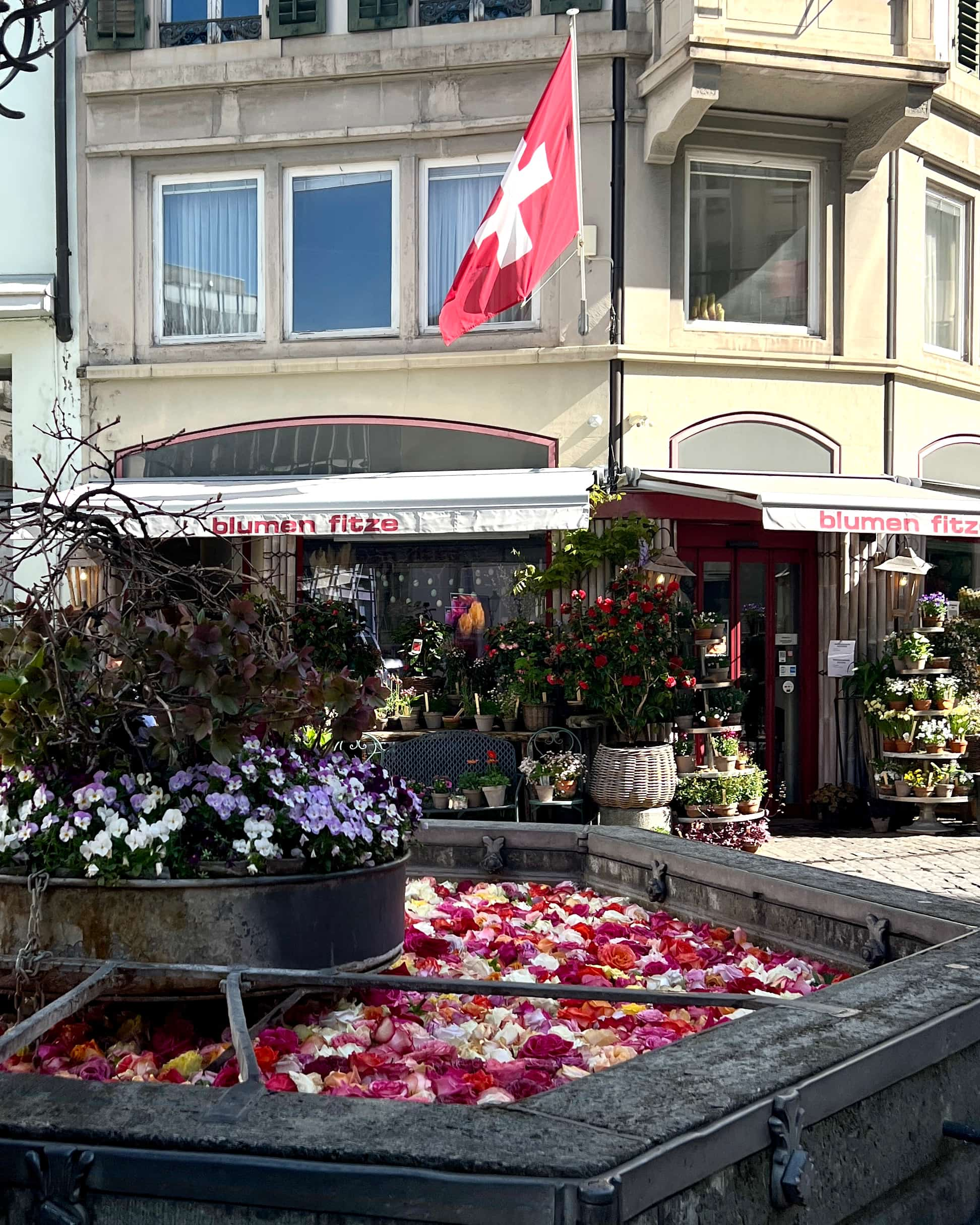
Münzplatz
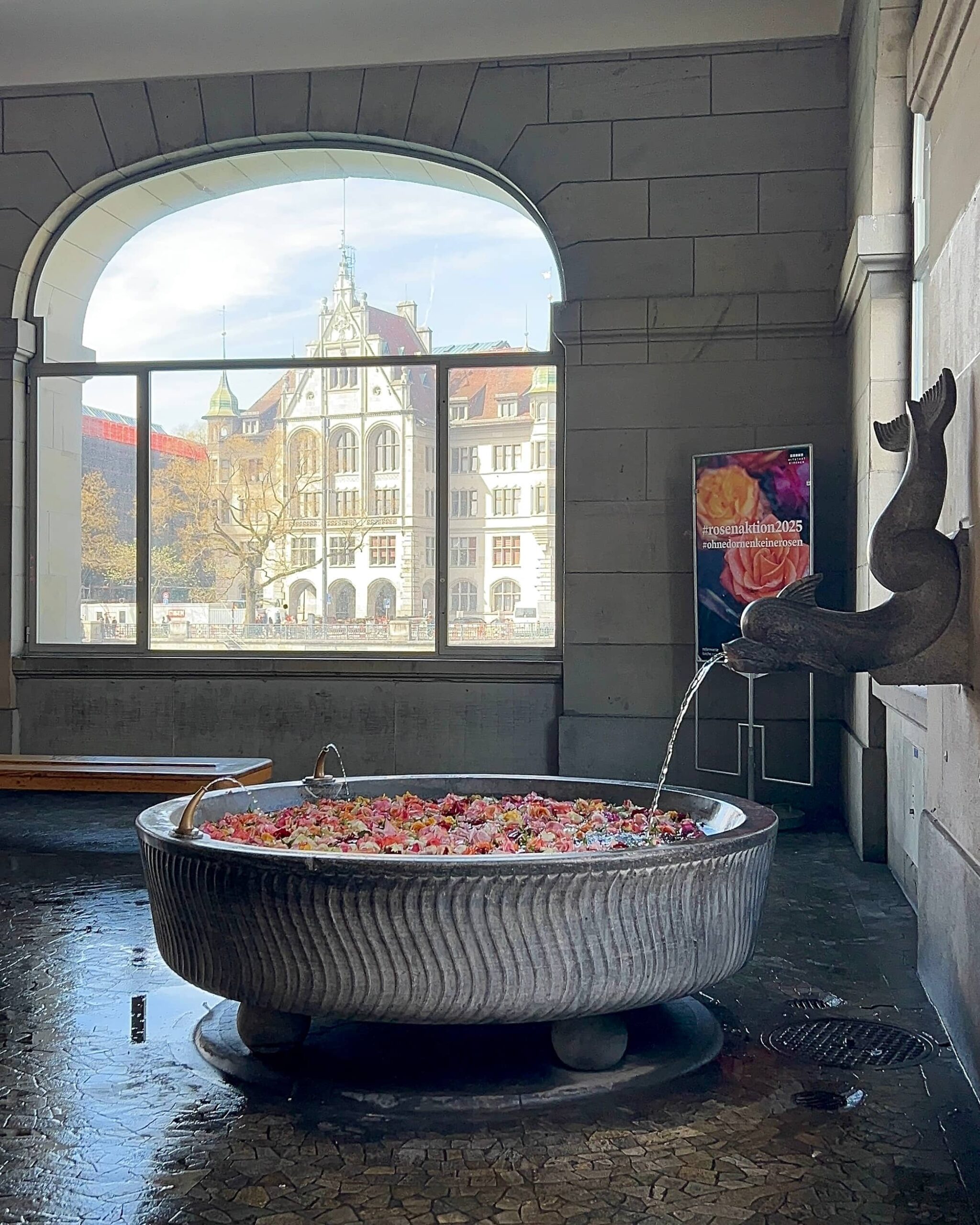
Helmhaus
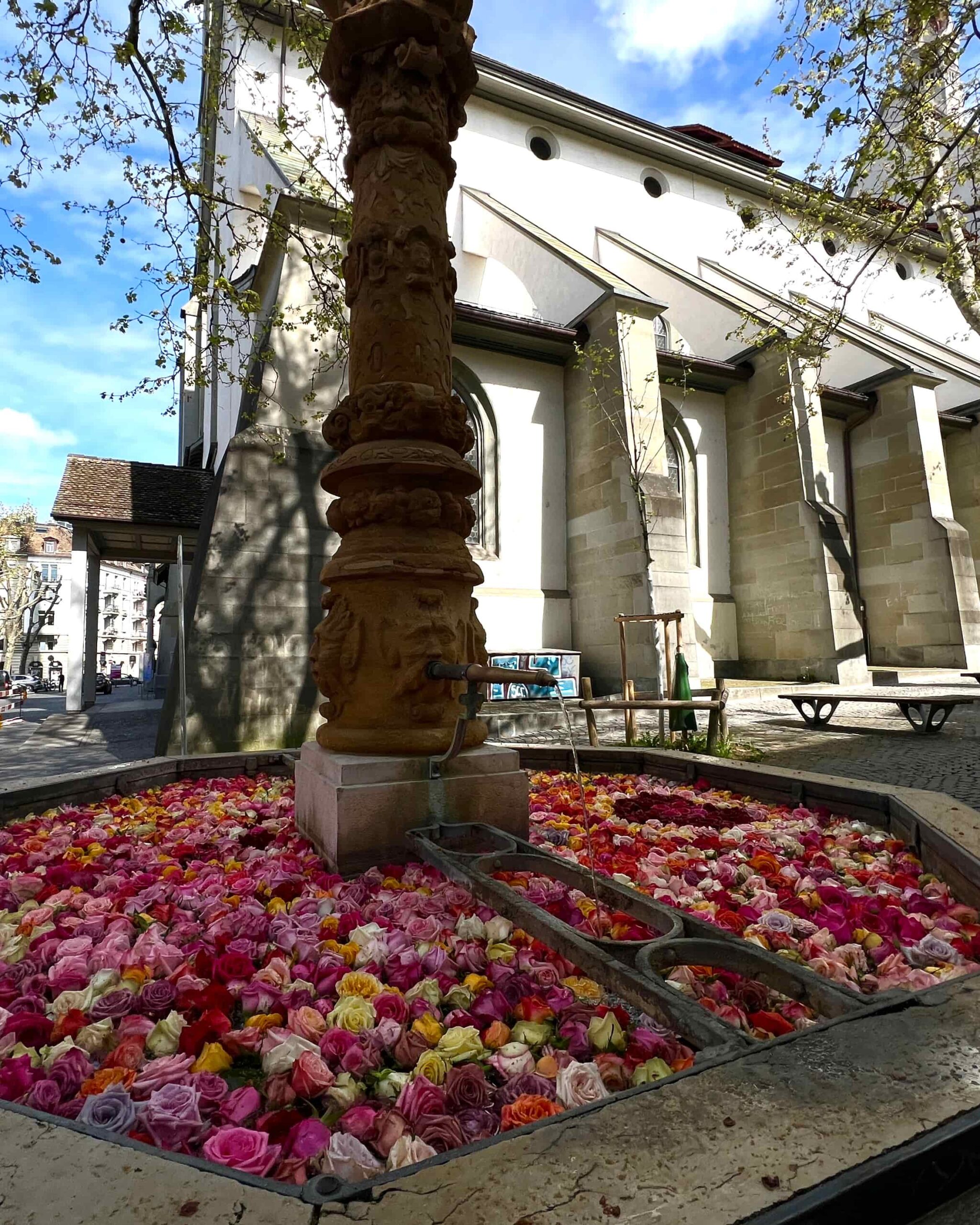
Zähringerplatz
Do you have a favorite rose fountain or a special memory connected to Easter in Zurich?
The one by the Fraumünster on the Münsterhof square holds special symbolic meaning for me. In that powerful setting, delicate roses bloom – it feels as though history and the present moment briefly shake hands. From there, the path leads over the Münster Bridge to the Wasserkirche, where you can find the small Helmhaus Fountain in the entrance hall – a hidden gem that might go unnoticed without its floral adornment. A bit further toward the main train station, stands the Froschauer Fountain by the Predigerkirche, the church with the tallest tower in the city. Surrounded by galleries and cafés, it adds to the atmosphere of the neighborhood. The last of the four rose fountains is found in the charming Münzplatz by the Augustinerkirche — directly in front of Blumen Fitze AG, the florist that brings us the Ecuadorian roses each year. Each rose fountain has its own magic for me!
What does Easter in Zurich mean to you personally – and how has this initiative shaped your view of the city?
For me, Easter in Zurich is a moment of hope, solidarity and peace – in the midst of daily urban life. The rose fountains show how powerful a simple, aesthetic gesture can carry a profound meaning. They’ve softened my view of the city: Zurich isn’t just efficient and well-organized – it’s also poetic, tender and community-minded. The rose fountains carry a message that’s understood around the world, across cultures and religions.
What kind of events do the Old Town churches organize at Easter?
We host a variety of services and concerts throughout Passion Week, from Palm Sunday to Easter Monday. For instance, we hold simultaneous concerts at Grossmünster and Fraumünster at 3 p.m. on Good Friday, marking the hour of Christ’s death. We also run a campaign called “Sharpen the Senses,” (Ger. Sinne schärfen) which includes a unique element: the church bells are dampened with rubber to create a softer, humming tone. This altered sound invites a different kind of listening and reflection until Easter Sunday.
What message would you like to share with readers about Easter and the rose fountains?
I hope people see the fountains as signs of hope—especially for those feeling lost or uncertain, in light of crises like the pandemic or global conflicts. The project began during a dark time, during the pandemic, and was one of the reasons we began this initiative. Perhaps these flowers can also serve as an invitation: to reduce prejudice, to find common ground across religious and cultural differences and to put humanity back at the center.
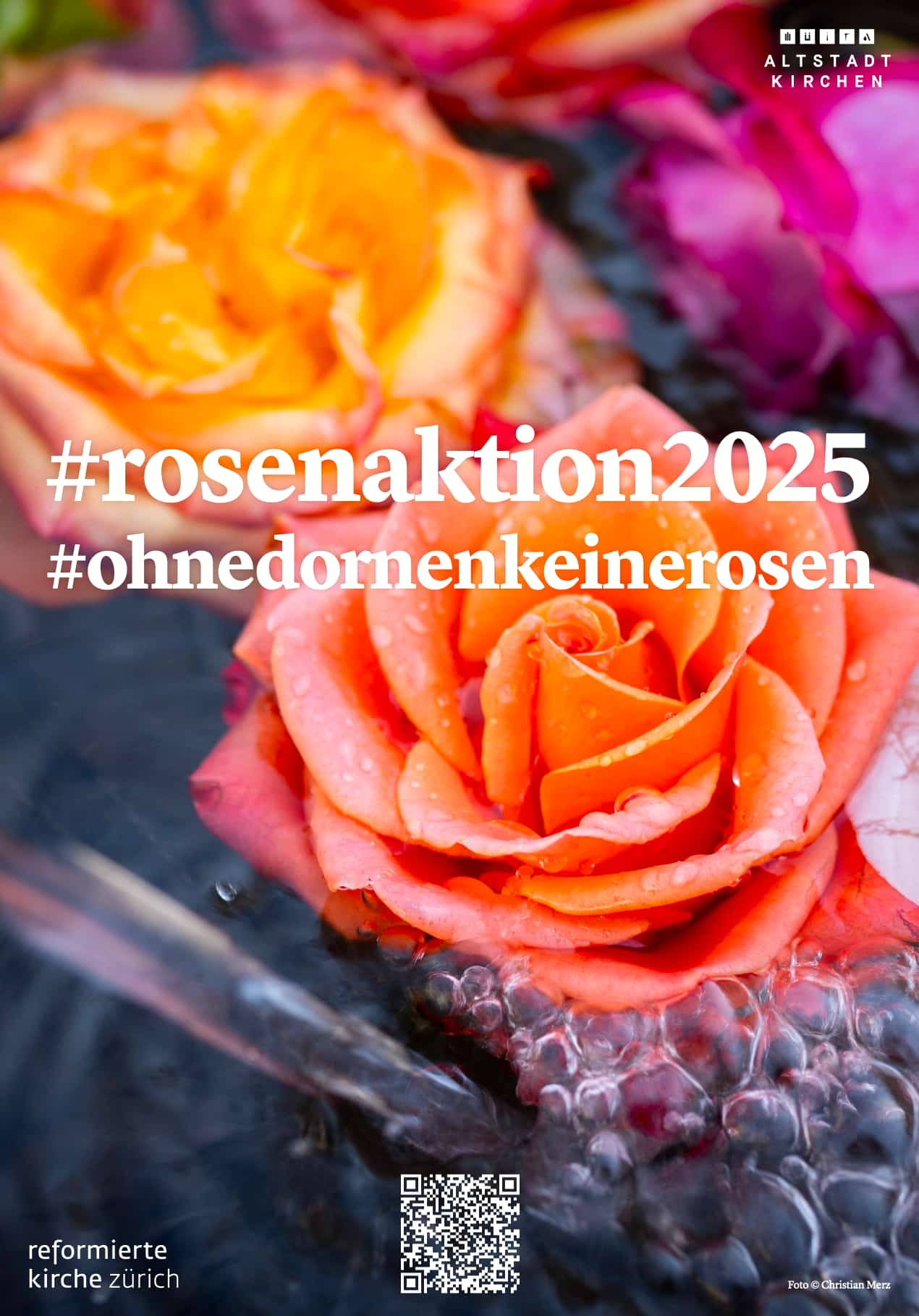
Discover more about Altstadtkirchen Zurich and their events at:
altstadtkirchen.ch
@fraumuenster
@grossmuenster
@predigerkirche
@stpeterkirche
@wasserkirchezurich